
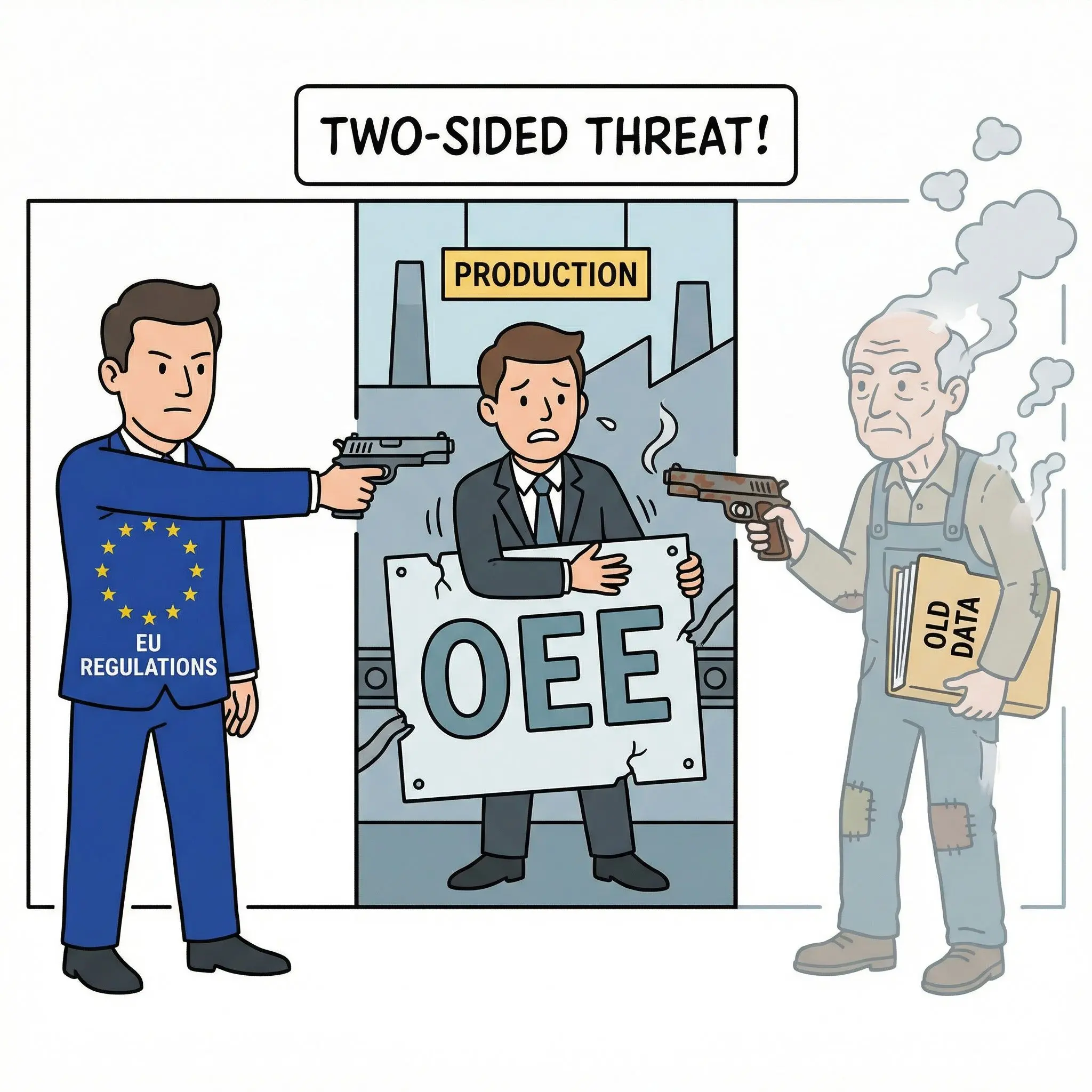
The year 2026 marks a turning point for the manufacturing industry in Europe. From August 12, the new EU Packaging and Packaging Waste Regulation (PPWR) comes into force—with binding requirements for recyclability and proof of conformity that go far beyond previous measures. At the same time, demographic change is reaching a critical threshold: the high-birth-rate baby boomer generations are retiring, and with them, decades of accumulated experiential knowledge are leaving the production floors.
Taken individually, each of these developments would already be a significant challenge. However, their simultaneity creates a constellation that presents many companies with a structural dilemma: increasing regulatory complexity meets shrinking personnel resources and vanishing implicit knowledge. The question of who will possess the know-how in the future to implement new compliance requirements thus becomes a core strategic issue.
This article highlights the interplay between both megatrends and demonstrates why knowledge management and AI in production are no longer optional modernization projects, but are becoming an operational necessity. Using the example of the pharmaceutical packaging industry—a sector that is traditionally heavily regulated and conservatively shaped—it becomes clear how digital assistance systems are already contributing today to securing experiential knowledge, making processes more efficient, and reliably fulfilling regulatory requirements.
The PPWR: New Rules of the Game from August 2026
With Regulation (EU) 2025/40—the so-called PPWR (Packaging and Packaging Waste Regulation)—the European Union has created a fundamentally new legal framework for packaging and packaging waste. The regulation was adopted on December 19, 2024, published in the Official Journal of the EU on January 22, 2025, and officially entered into force on February 11, 2025. It will take full legal effect from August 12, 2026, in all member states. The full text of the regulation can be viewed at eur-lex.europa.eu.
Unlike the previous EU Packaging Directive 94/62/EC, which had to be transposed into national law by the member states, the PPWR applies directly and bindingly. National special regulations are thus replaced by uniform European standards—a paradigm shift that creates legal clarity but simultaneously requires significant adjustments within companies.
The central requirements of the PPWR can be summarized in three dimensions:
First, comprehensive documentation obligations are being introduced. From August 12, 2026, an EU declaration of conformity according to Article 39 of the regulation must be available for every piece of packaging placed on the market. The prerequisite for this is a conformity assessment procedure and technical documentation according to Annex VII, which includes, among other things, a description of the packaging, its intended use, and the materials used. These documents must be kept for five years for single-use packaging and ten years for reusable packaging and must be presented to market surveillance authorities upon request.
Second, the PPWR defines binding sustainability goals. By 2030, all packaging must be designed to be recyclable. For plastic packaging, staggered minimum proportions of post-consumer recyclate apply. Furthermore, the permitted empty space in shipping and transport packaging will be limited to a maximum of 50 percent from 2030—a measure that particularly affects e-commerce.
Third, the regulation establishes a clear distribution of roles along the entire packaging life cycle. Producers, manufacturers, importers, and distributors are each assigned specific duties. This polluter-pays allocation of responsibility is intended to ensure that sustainability is not just formulated as an abstract goal but is anchored operationally.
For manufacturing companies, this means: existing processes must be reviewed, documentation systems expanded, and employees trained. The question of who builds up this knowledge and maintains it permanently leads directly to the second megatrend affecting the industry at the same time.
Demographic Change: When Experiential Knowledge Retires
While regulatory requirements are rising, the manufacturing industry is simultaneously facing a personnel upheaval of historic proportions. The high-birth-rate baby boomer generations—those employees born between 1955 and 1969—will reach retirement age in the coming years. With their departure, not only is a large number of workers leaving the companies quantitatively, but qualitatively, an enormous stock of experiential knowledge is also departing.
The figures illustrate the extent: According to the Federal Statistical Office, the proportion of older members of the workforce is growing continuously. While 20 percent of the workforce was 55 or older in 2014, this proportion was already over 26 percent in 2024. Germany thus has one of the highest proportions of older workers in a European comparison. In the next 10 to 15 years, these cohorts will successively enter retirement—and the succeeding generations cannot close the resulting gap in terms of numbers.
The manufacturing sector is particularly affected. Around 1.7 million employees aged 55 to 65 currently work in this sector—this corresponds to a share of 22 percent of all older employees in Germany. Industries such as mechanical engineering, the chemical and pharmaceutical industries, and packaging technology are therefore particularly affected by demographic change.
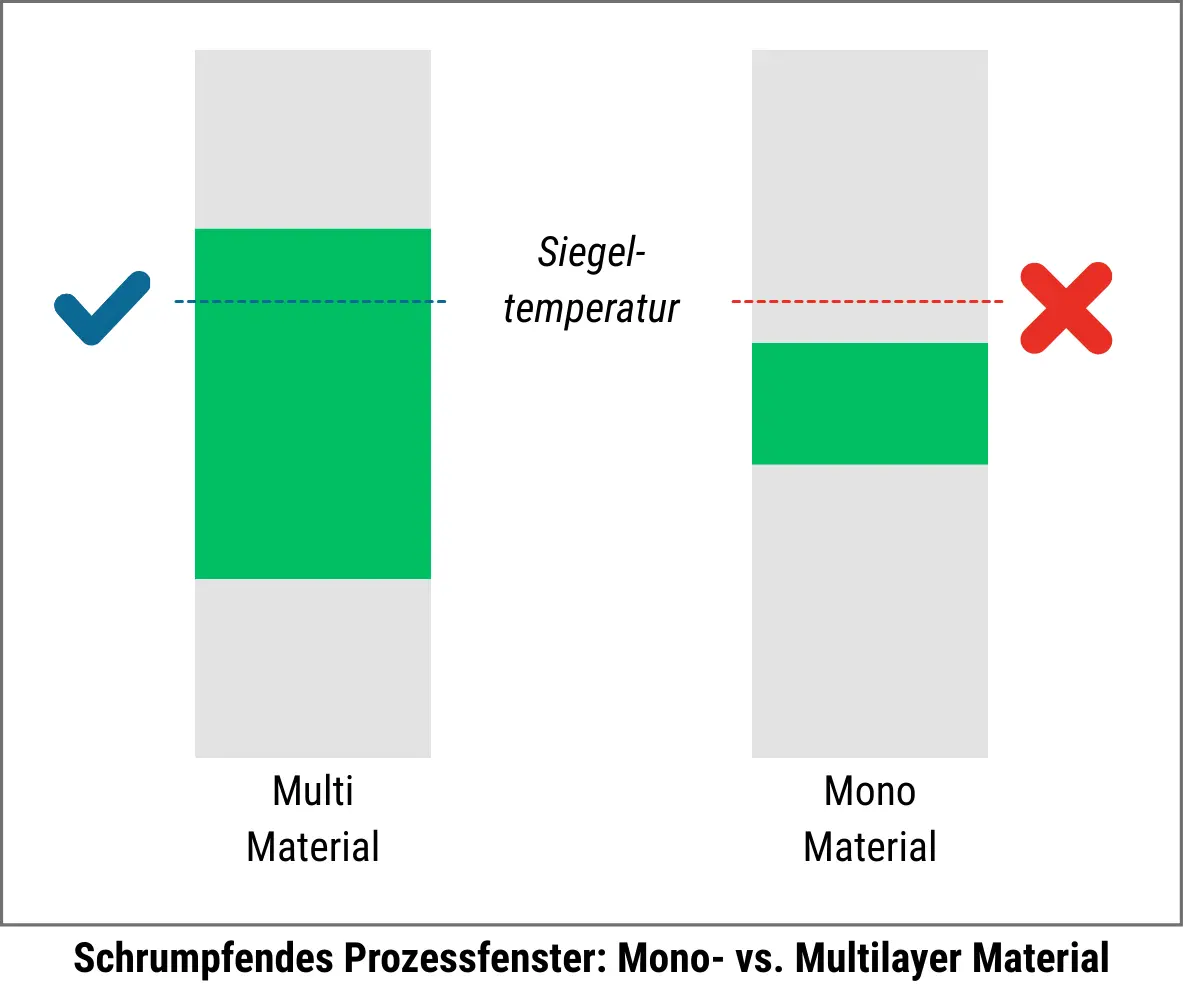
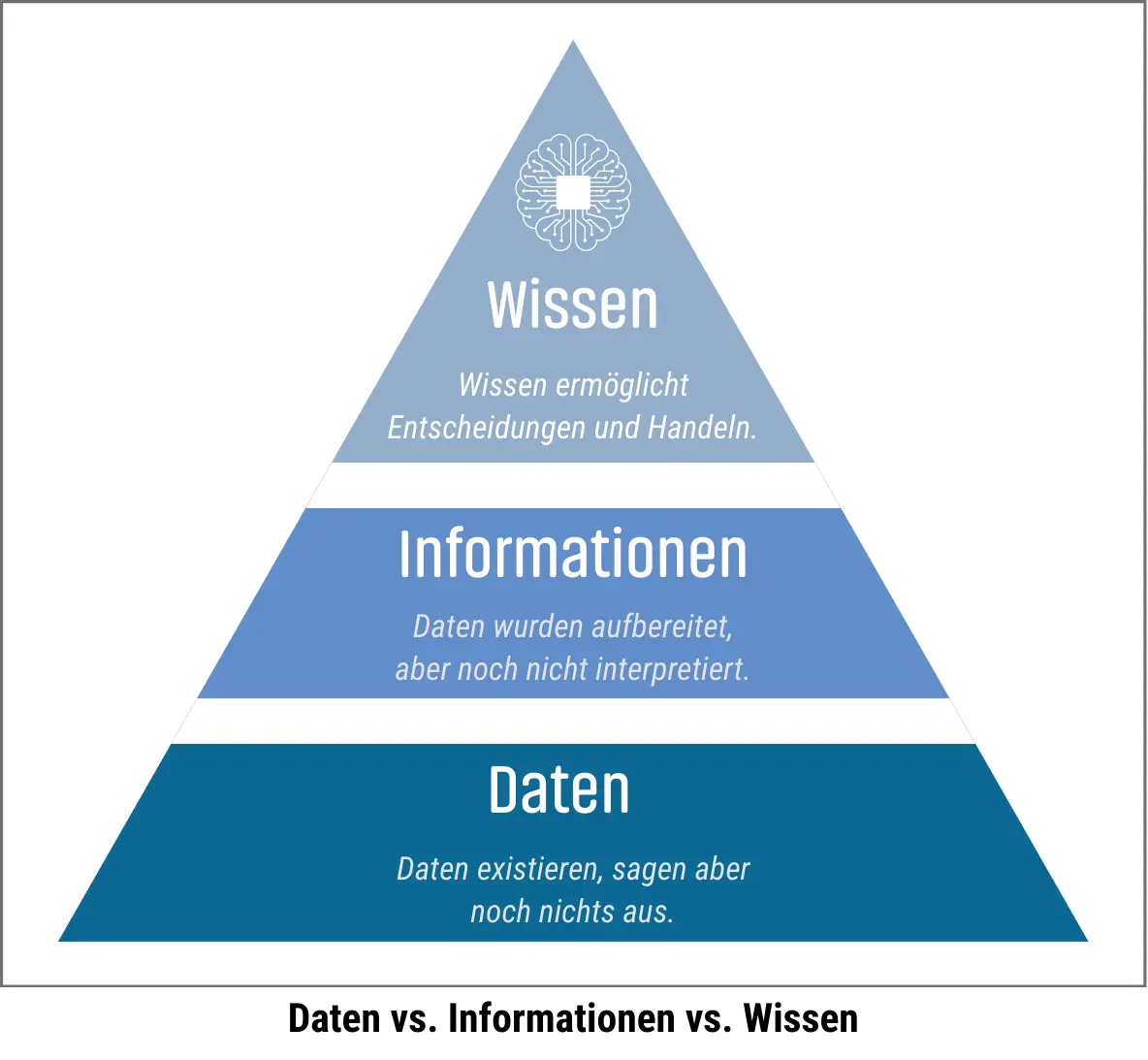
What makes this development so critical is the nature of what is at risk of being lost. To understand this, it helps to look at the “knowledge staircase” described by Klaus North. It fundamentally distinguishes between information and knowledge. Information—facts, processes, measured values—can be documented: in manuals, ERP systems, photos, or videos. Knowledge, on the other hand, only arises through the networking of many pieces of information in a specific context. And exactly this networking cannot be captured easily.
A practical example illustrates the difference: An experienced specialist at the machine hears a rattling noise from the system. First thought: The belt might not be tensioned enough. But they also know that processed cheese is currently being handled—a material that sticks heavily to the belt and can cause a similar noise even with correct tension. Their assessment: Everything is probably fine.
This conclusion connects several levels of information in a split second: acoustic pattern recognition, mechanical understanding of belt tension, material properties of the processed cheese, and the current production context. None of this information alone would lead to the correct assessment—only their networking generates knowledge relevant for action.
Such complex relationships can only be stored in highly networked systems: in the human brain—or in machine learning models. On paper, in databases, or classic documentation systems, however, only the information remains, not the knowledge.
This is precisely where the structural problem of demographic change lies: When experienced employees leave the company, not only is documentable information lost, but above all, the networking performance stored in the head—that ability to draw the right conclusion from many individual pieces of information at the right moment. New employees need years to build up comparable expertise—time that is not available in view of the skills shortage and increasing regulatory requirements.
The Dangerous Overlap: More Requirements, Fewer Know-how Holders
The consequences can be illustrated by a specific point: The PPWR not only demands comprehensive documentation obligations but also implies specific technical measures on machines and systems. To prove the required conformity, production processes must be precisely monitored, parameters documented, and deviations recorded traceably.
A practical example: Classic multilayer packaging combines, for example, PET/OPA as an outer, high-temperature-stable layer with a low-melting PE sealing inner layer. This allows for process windows for the sealing temperature with a width of 20–30°C and correspondingly robust processes. However, since the layers cannot be separated, such packaging is practically non-recyclable and must be replaced by monomaterials (e.g., mono-PE or mono-PP). With these, there is often only a 2–5°C difference between “safely sealed” and “burned or sealed through.”
These narrow process windows result in high requirements for stable process management. Times, temperatures, and pressures must be precisely maintained. Minor disturbances in heat transfer—such as slight contamination of the sealing tool or the sealing surfaces—lead immediately to production disruptions. To make matters worse, recycled materials are increasingly being used, which fluctuate even more in their properties (thickness, molar mass distribution of the polymer chains, etc.) than with previous films.
In combination with the very narrow process windows, this severely limits classic approaches to process optimization—for example, through centerlining. There are no optimal process parameters; instead, adjustments must be made repeatedly for each new batch based on a wealth of experience. Such adjustments require not only technical equipment but above all that networked knowledge that has so far only existed in the minds of experienced employees.
Classic approaches to knowledge transfer—onboarding by experienced colleagues, informal transfer in everyday work, training by internal experts—reach their limits under these conditions. The time for an orderly handover is short, the complexity of the requirements is high, and the succeeding specialists are rare.
Companies are thus faced with a double task: building up new compliance knowledge and securing existing experiential knowledge—before it is irretrievably lost. New instruments are needed to meet this challenge.
Knowledge Management and AI as a Bridge: How Digital Assistance Systems Address Both
In view of this double challenge, one question takes center stage: How can experiential knowledge be systematically captured before it leaves the company—and how can this knowledge be prepared so that it remains available and usable even under increasing regulatory requirements?
The answer lies in the combination of networkable knowledge management and Artificial Intelligence.
For classification: Artificial Intelligence (AI) is the umbrella term for systems that take over cognitive tasks: pattern recognition, decision-making, or language understanding. Machine Learning (ML) is a sub-discipline of AI: instead of explicitly programming rules, ML systems learn relationships from data.
Classic documentation systems—wikis, manuals, training videos—do not fail due to a lack of care, but due to a structural limit: they can store information but cannot perform networking. However, exactly this networking is what constitutes knowledge.
AI-based knowledge management systems like MADDOX solve this problem through a specific two-component architecture:
The content database stores information in the form of knowledge cards—texts, images, videos on incidents, solutions, material and system peculiarities. Experienced employees can contribute their knowledge without having to write manuals.
The machine learning model takes over the networking performance. It learns relationships between the stored information and the respective context data—be it machine states, material batches, environmental conditions, or process parameters. This ability for context-dependent linking was previously reserved for the human brain.
Content database + ML model for information networking = Knowledge storage.
In application, this means: The system does not deliver an unstructured collection of documents, but context-related recommendations—adapted to the current situation. Previous incidents with a similar pattern, proven solutions, and notes on known peculiarities are not just found but put into perspective. The expertise of long-term employees is thus preserved not as static information, but as applicable, networked knowledge.
A company that captures its experiential knowledge in this way gains more than just protection against demographic change. It creates a basis on which new employees can become operational more quickly, on which regulatory requirements can be implemented with consistent quality—and on which collective know-how is no longer tied to individual heads.
From Practice: How Bayer and Peerox Successfully Use Assistance Systems
At a world-leading company in the pharmaceutical industry, the Peerox team has already proven how valuable innovative knowledge management with MADDOX is for increasing efficiency in production. A detailed analysis of production data, particularly on certain production lines, showed significant improvements in the OEE value.
An outstanding example is a central production line in the pharmaceutical sector, which is responsible for the manufacture of highly specialized medications and requires the highest precision and quality. Production in this line is particularly complex, as it must fulfill both demanding mechanical processes and strict regulatory requirements. Through the integration of MADDOX, the efficiency and utilization of the systems could be significantly increased—the OEE value rose by 7%, which represents a verifiable improvement.
This increase resulted not only from higher machine availability due to reduced downtimes, but also from optimized communication processes between departments—which led to a noticeably better overall performance.
Further advantages of MADDOX were the reduction of waste and faster onboarding of employees, which had a significantly positive effect in the course of major internal restructurings in recent years. Through intelligent analysis and the immediate identification of problem causes, the company was able to significantly extend machine runtimes and simultaneously reduce production costs.
This is proof that MADDOX represents a real increase in value for your company and has the potential to significantly improve a wide variety of production processes.
From Practice: How Bayer and Peerox Successfully Use Assistance Systems
A look at practice shows that these considerations are not merely theoretical. In an episode of the Packaging Valley podcast “Verpackt und Zugeklebt,” Matthias Markus, Head of Pharmaceutical Packaging Technology at Bayer AG, and Andre Schult, founder and CEO of Peerox GmbH, report on their experiences with digital assistance systems in the production of pharmaceutical packaging.
The initial situation is exemplary for the industry: Pharmaceutical packaging is heavily regulated, complex, and traditionally conservatively shaped. Exactly this combination makes digitalization a particular challenge here—but at the same time opens up significant opportunities. In the conversation, Markus and Schult explore the question of how the AI-supported assistance system MADDOX works in everyday production, what role employees play in it, and what results the collaboration between the startup and the large corporation has produced.
Digital assistance systems can measurably increase overall equipment effectiveness (OEE) by identifying malfunctions faster and providing solution knowledge immediately. At the same time, they enable the systematic securing of experiential knowledge—an aspect that is becoming increasingly important in view of demographic change.
How well this approach works is shown by a recent award: The joint project between Bayer and Peerox was honored with the maintenance Instandhaltungspreis 2025—awarded at maintenance Munich as a model for the entire industry.
The podcast offers a concrete insight into how the challenges outlined in this article can be addressed in operational reality.
The full episode is available on Spotify and Apple Podcasts.
Conclusion: 2026 as an Opportunity—Those Who Act Now Secure the Future
The year 2026 will become a touchstone for the manufacturing industry. With the PPWR coming into force in August, regulatory requirements will rise noticeably—and demographic change will not wait. Companies that view both developments as separate challenges risk being ground down between increasing complexity and vanishing know-how.
But there is also an opportunity in this constellation. Those who start now to systematically capture experiential knowledge and transfer it into intelligent assistance systems not only create the prerequisites for regulatory compliance but also build a knowledge base that makes the company more resilient in the long term.
The example from pharmaceutical packaging illustrates that this approach works in practice—even in a heavily regulated and traditionally shaped environment. The tools exist, the empirical values are available. What remains is the question of timing: The coming months offer a window of opportunity to secure knowledge and adapt structures before both come under pressure simultaneously.